Pre-trip inspections and driver vehicle inspection reports
Understand the inspection report, verify recorded work, and route unresolved defects.
What PTI and DVIR mean
A pre-trip inspection (PTI) is the driver’s safety check before a trip. A driver vehicle inspection report (DVIR) records inspection findings. Submitting the report does not prove that defects were repaired.
Check the truck and date on the report. Record inspection work as on-duty not driving and send unresolved defects to maintenance and safety.
Check the report belongs to the right equipment
The driver uses Vehicle inspection / Inspections when available. Check the vehicle, date, reported defects, and any repair follow-up. If the feature is not enabled, use the carrier’s reporting process.
Review unresolved defects with maintenance. Keep evidence of the outcome rather than treating a submitted report as a completed repair.
Find the report’s safety assessment
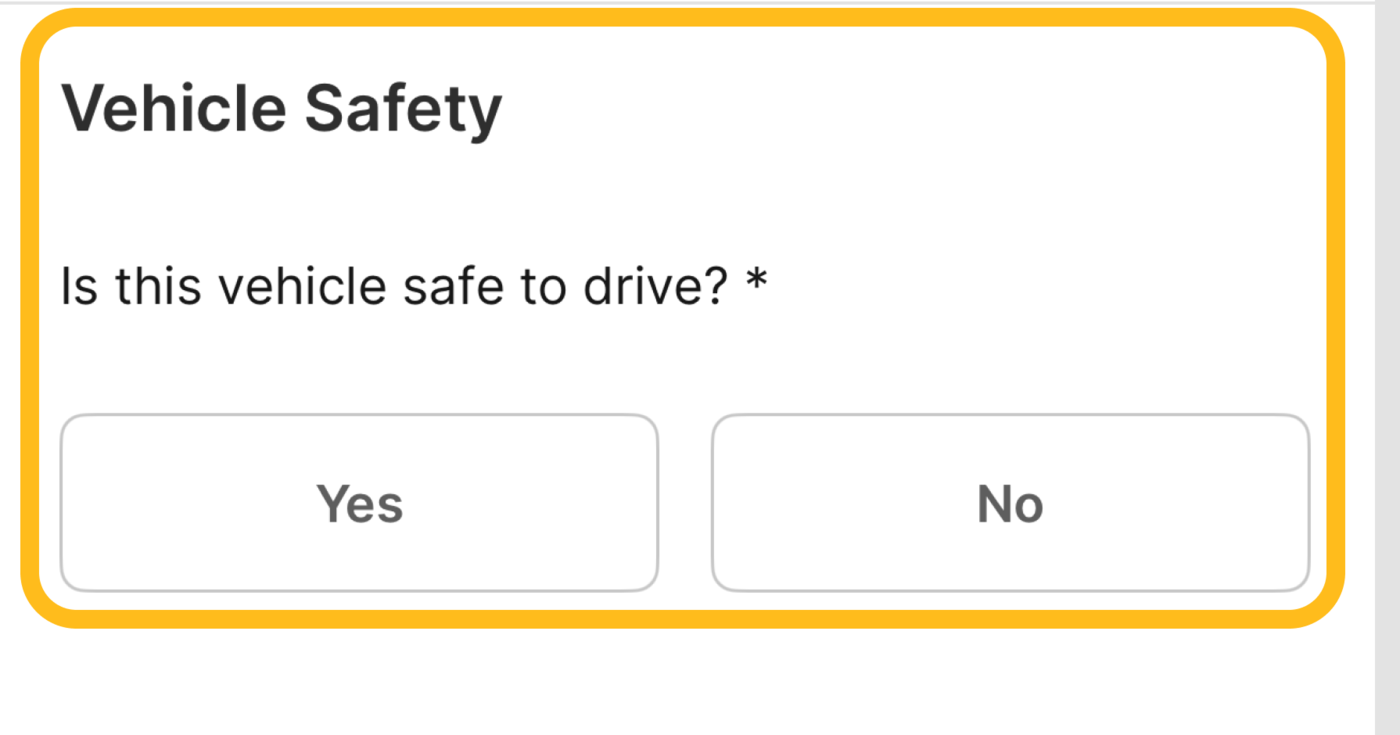
What to check on this screen
- Check the driver’s safety assessment along with the recorded defects.
- An unsafe finding needs maintenance and safety follow-up. Check the repair evidence before treating the issue as closed.
Keep vehicle reports and log certification separate
For ordinary property-carrying work, a no-defect DVIR is not always federally required; carrier policy may require one. Follow the applicable reporting process.
Signing an inspection report does not certify the duty log. Check each requirement separately.
A simple review routine
- Match the report to the truck and date.
- Check inspection work is recorded as on-duty.
- Track unresolved defects through the maintenance and safety process.